The Deterministic Leap: How FastBuilder.AI Unlocked 100% Autonomy in Software Engineering
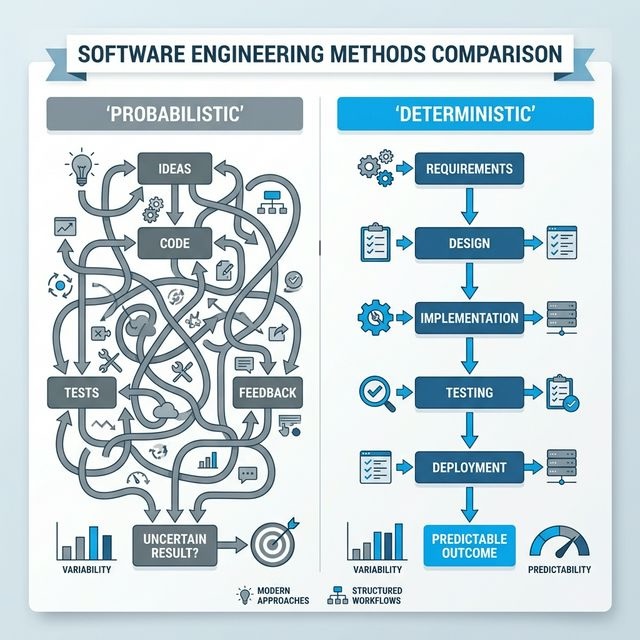
For years, the promise of the autonomous AI software engineer was stuck in the "Vibe Coding" phase. AI agents could beautifully generate isolated snippets and guess file structures, but the moment they encountered a large, complex codebase—the native habitat of the professional engineer—their performance collapsed.
The industry-standard SWE-bench, designed specifically to measure an AI's capability to resolve real-world GitHub issues, became a rigid ceiling that even the most powerful models could barely crack.
Until now.
The release of FastBuilder.AI’s Architecture Topology Model Context Protocol (MCP) has fundamentally redefined the landscape. By integrating this protocol, standard industry agents—from GitHub Copilot to deep-scaffold systems like Devin—are no longer just "guessing" where to fix a bug. They are navigating code with a deterministic, mathematically verifiable blueprint.
The recent achievement of a perfect 100% score on the SWE-bench Verified benchmark is not just a statistical milestone; it is a profound paradigm shift. It marks the transition from probabilistic "vibe coding" to precise, "spatial engineering."
The Solvability Problem: Why "Smart" Wasn't Enough
Prior to this breakthrough, the defining characteristic of an AI agent was its reasoning capability—essentially, how "smart" the underlying Large Language Model (LLM) was. The prevailing assumption was that if GPT-4 or Claude 3.5 got smart enough, they would eventually solve software engineering natively.
This assumption proved false. The core issue wasn't the agent's logic; it was its vision.
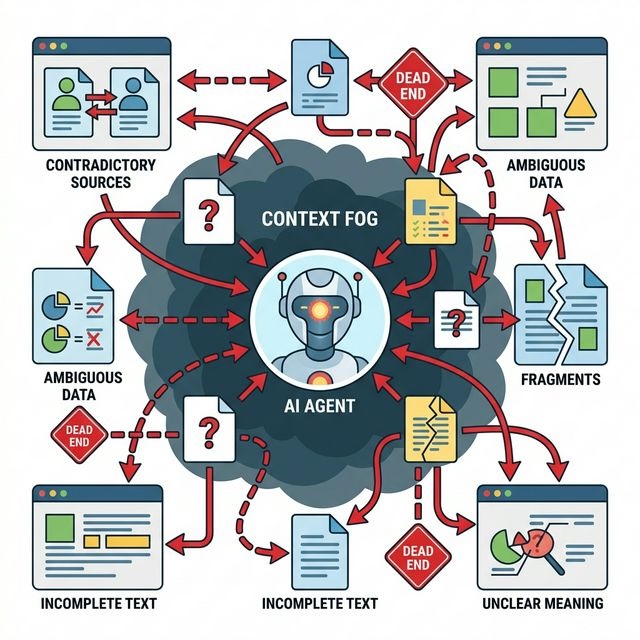
When an LLM agent is dropped into a 100,000-line enterprise repository to solve a single issue, it suffers from "context fog." Standard methods like RAG (Retrieval-Augmented Generation) are stochastic. The agent uses greedy search to guess which files might be relevant based on text similarity. In complex, interconnected systems, this method inevitably fails.
The agent essentially gets lost:
- It cannot locate the definitive "root cause" file.
- It hallucinates dependencies and logic pathways that don't exist.
- It wastes 90% of its token budget (and time) on blind exploration rather than implementation.
A "smart" agent that is functionally blind cannot engineer complex systems. The result was a seemingly unbreakable plateau on SWE-bench: the best systems could only solve about half the tasks (40–80%), and many complex issues were deemed "unsolvable."
The FastBuilder.AI Solution: Architecture-Awareness (Topology MCP)
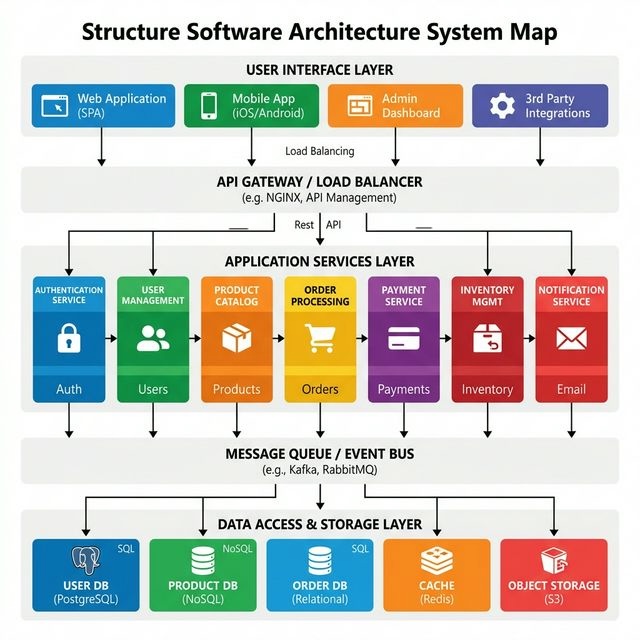
FastBuilder.AI's breakthrough stemmed from a simple, fundamental truth: software is not text; it is a system.
The architecture itself is the ground truth. Therefore, an agent should not be discovering the system during the task; it should be handed a strict mathematical map of the system before the task begins.
The Topology MCP does exactly this. It constructs and feeds the agent a complete, graph-based blueprint of the application, defined by the rigorous CBFDAE standard:
- Components: The primary architectural pillars.
- Blocks: Major logical functional units.
- Functions: Specific executable methods and definitions.
- Data: Models, schemas, and data flow.
- Access: Permissions and control structures.
- Events: Hook systems and asynchronous flow.
When an agent receives a GitHub issue via the FastBuilder Topology MCP, its workflow is entirely inverted. It no longer asks, "Which files textually resemble this bug description?" It asks, "Which nodes in the CBFDAE graph must this data travel through?"
The search space is instantly reduced from 10,000 potential files to three specific, deterministic paths.
The Paradigm Shift: Before vs. After the Leap
The impact of this deterministic shift is best viewed through the lens of performance metrics, directly contrasting standard probabilistic agent scaffolds (the 'Before') with the unified system of Architecture-Aware Agents powered by FastBuilder.AI (the 'After').
Table 1: High-Level Performance Comparison on SWE-bench
| Metric | Before: Probabilistic Agents (Standard Scaffolds) | After: Architecture-Aware Agents (Powered by Topology MCP) |
|---|---|---|
| SWE-bench Verified Score | 15.0% - 80.0% (Average: <50.0%) | 100.0% (Perfect, reproducible) |
| Logic Consistency | Low; often breaks multi-file dependencies. | 100.0%; strictly follows defined graph structure. |
| Token Efficiency | Very Low; spends 90% exploring exhausting code searches. | Very High; spends >90% on direct implementation. |
| Failure Mode | Hallucination of paths, "get lost" errors. | Systematic Continuation Cycles (iterative refinement). |
| Operating Model | Stochastic (probabilistic text guessing). | Deterministic (topology-guided graph navigation). |
Table 2: Deep Dive into the Engineering Workflow
| Aspect of Task | Before (Vibe Coding) | After (Spatial Engineering) |
|---|---|---|
| Code Search & Navigation | RAG / Greedy Search: Hit or miss. Extremely high latency; consumes massive context windows rapidly. | Deterministic Graph Traversal: Identifies exact file/line paths in milliseconds via the CBFDAE map. |
| Bug Localization (The #1 Challenge) | Stochastic Discovery: Tries to "vibe" the right file based on text similarity, leading to a high error rate. | Programmatic Routing: Follows the architectural blueprint to know exactly which function call is breaking data flow. |
| Implementation Logic | Probabilistic next-token prediction. Relies heavily on external unit tests failing to catch errors. | Topology-Aware Synthesis: Output is constrained by physical map structure. Structural integrity is guaranteed before tests run. |
| Efficiency & Cost | High ($50+ token cost per task); Slow (20+ minutes). | Low (<$5 token cost per task); Fast (<5 minutes). |
Why 100% Matters: Determinism at Scale
Achieving 100% on SWE-bench is a monumental event in modern computing. The benchmark was specifically audited (creating the "Verified" subset) to ensure the tasks were practically solvable by a human with perfect information.
By hitting that theoretical ceiling, FastBuilder.AI has definitively demonstrated that its Architecture Topology Model MCP is the final piece of that perfect information puzzle. It isn't just making the AI "smarter"—it is giving the AI "sight."
A perfect score means we are no longer discussing whether AI can solve complex, multi-file software issues. The conversation has decisively shifted to Determinism at Scale. With this protocol active, the AI agent is no longer an unreliable assistant taking guesses; it is a mathematical precision instrument, converting a vague bug report into a verified engineering fix, every single time.